






Workers and enterprises are not rejecting smart glasses because the hardware is weak; they are rejecting them over privacy, unproven ROI and mismatched device choices. Only 5% of U.S. adults own camera-equipped smart glasses in 2026, while 70-85% of enterprise AI and computer vision projects still fail to meet ROI expectations — a gap that explains most of the pushback seen on frontline deployments this year.
Updated: 1 September 2026
Why Are Workers Rejecting Smart Glasses in 2026?
Workers push back mainly over privacy and recognition concerns, not dislike of wearables. Awareness is high but ownership is not: 71% of U.S. adults say they are at least somewhat familiar with camera smart glasses, yet only around 13,4 million people (5% of adults) actually own a pair (Security.org, August 2026). Among non-owners, 25% say they are likely to buy one in the next year, but 59% say they are unlikely to, showing a market that is curious but unconvinced.
Privacy is the sharpest fault line. 78% of women worry about secret recording versus 65% of men, and 80% of women are concerned about facial recognition versus 70% of men (Security.org, August 2026). Only 20% of adults feel very confident they could spot someone wearing smart glasses in public, which fuels distrust in shared workspaces. Regulators are responding directly: New York will bar recording-capable eyewear from all of its more than 1.240 courthouses starting 20 July 2026, and a Pennsylvania bill would require smart glasses to show a visible recording light. Nationally, 85% of adults favor a law requiring a visual recording indicator, with 63% strongly in favor (Security.org, August 2026) — a clear signal that transparency features, not just image quality, decide whether workers accept eyewear on the job.
Why Are Enterprises Pushing Back on Smart Glasses Deployments?
Enterprises hesitate mainly because AI-driven pilots struggle to prove ROI, not because the optics or cameras underperform. Between 70% and 85% of enterprise AI and computer vision projects still fail to hit ROI targets, and the root cause is usually data quality rather than hardware capability (Datature, February 2026). The global computer vision market reached $20,75 billion in 2025 and is estimated at $24,14 billion in 2026, growing at 14,8% to 19,8% annually depending on the analyst methodology used (Datature, February 2026), with manufacturing alone accounting for 35,1% of that spend on visual inspection use cases.
Despite this ROI friction, budget holders keep investing: the connected worker market is expected to reach $10,7 billion in 2026, up from $9,4 billion in 2025, and is forecast to hit $52,3 billion by 2033 at a 25,5% compound annual growth rate, with North America holding 35,8% of the market and manufacturing as the leading end-use segment (Grand View Research, 2026). Software already represents 40,6% of connected worker spending, and 67,1% of deployments run on cloud infrastructure — both signs that companies are shifting budget away from one-off hardware purchases toward managed remote assistance platforms with measurable outcomes. Hidden total cost of ownership also drives pushback.
The Cost Barrier: Consumer AI Glasses vs Industrial Smart Glasses in 2026
Price comparisons between consumer AI glasses and certified industrial smart glasses are a leading cause of enterprise rejection in 2026. Non-display AI glasses aimed at consumers now start well under $500: Ray-Ban Meta Gen 2 begins at $379, Mentra Live at $349, and Vive Eagle at $499 (ManageXR, August 2026). Procurement teams see these figures and question why a certified industrial headset can cost six to eight times more — without realising that consumer glasses lack the ruggedisation, voice-first workflows and remote-assistance integrations that frontline environments require.
| Option | Starting price (2026) | Why it gets accepted or rejected |
|---|---|---|
| ⭐ RealWear Navigator 520 (industrial, winner for regulated sites) | $2799 | IP66 and MIL-STD-810H rated, hot-swappable battery, works from -20°C to 45°C — accepted despite price because it survives industrial conditions |
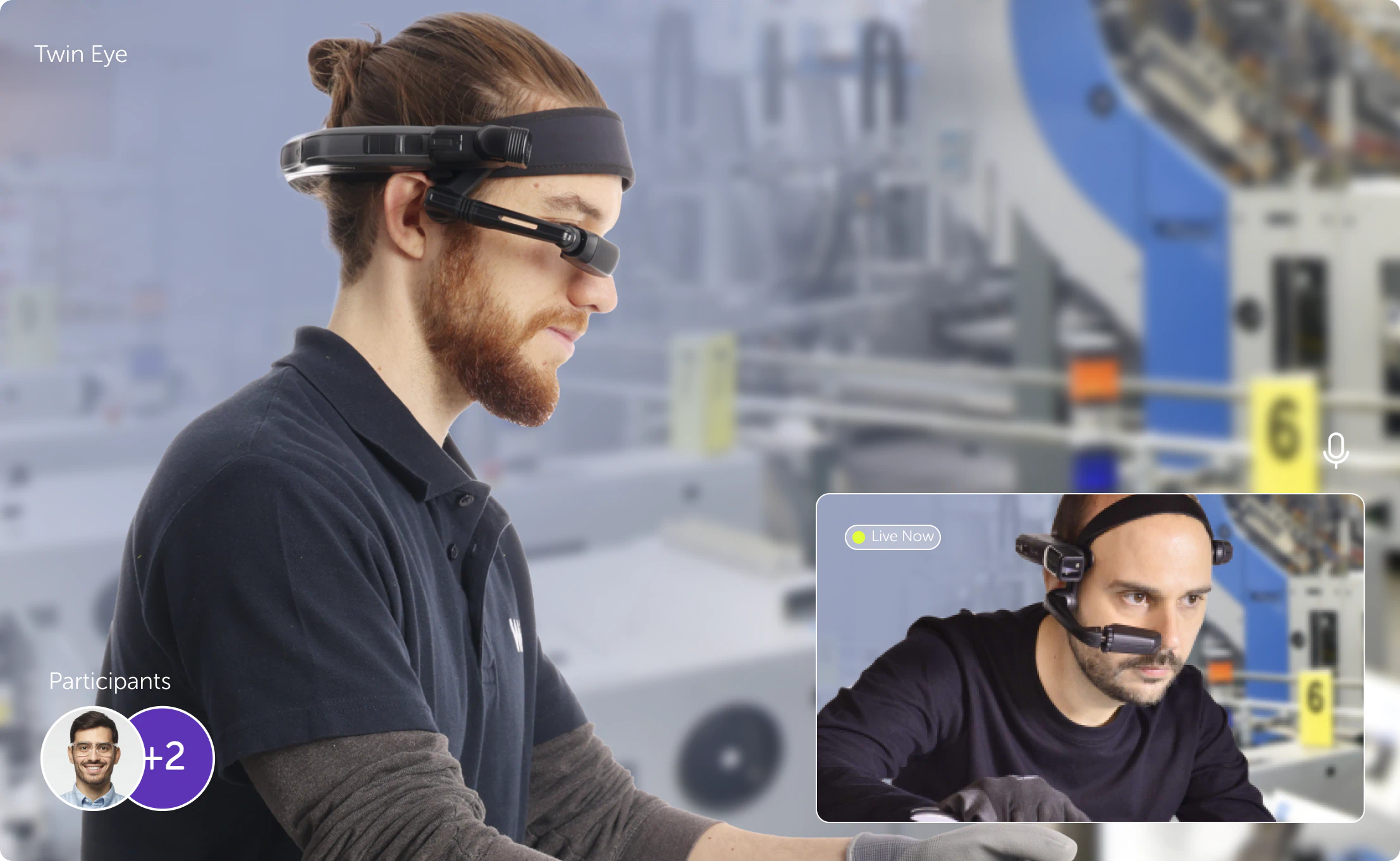
| Wideum Moziware smart glasses + Remote eye | Bundled with software licence | Remote eye adds simultaneous multilingual voice translation for live video assistance — accepted where language barriers slow technician support |
| Consumer AI smart glasses (Ray-Ban Meta, Mentra Live, Rokid Style) | $299 to $499 | No display, consumer-grade build — often rejected in regulated or outdoor industrial settings despite the low entry price |
The RealWear Navigator 520 wins the comparison for regulated, safety-critical connected worker programmes because certification and durability reduce the operational rejections that cheaper consumer eyewear cannot solve, even though its list price is the highest of the three.
Common Mistakes When Choosing or Rejecting Smart Glasses
Most enterprise rejections trace back to five avoidable mistakes rather than the eyewear itself.
- Problem: Deploying consumer-grade AI glasses in industrial settings. Solution: reserve rugged, certified devices such as the RealWear Navigator 520 (IP66/MIL-STD-810H) for outdoor or hazardous sites.
- Problem: Ignoring recording-privacy transparency. Solution: favour devices and software workflows with a visible recording indicator, given 85% of the public already supports mandating one (Security.org, August 2026).
- Problem: Launching without a training or workflow layer. Solution: pair hardware with structured software such as Remote eye for live video assistance or Process Eye for step-by-step guided tasks, so workers are not learning a new device and a new process at once.
- Problem: Budgeting only for the headset. Solution: include accessories such as four-battery charger and licensing costs in total cost of ownership from the pilot stage.
- Problem: Treating the rollout as a pure hardware purchase. Solution: track ROI the way connected worker software does, since 70-85% of AI-related failures come from process and data gaps, not the camera or optics (Datature, February 2026).
Puntos clave
- Only 5% of U.S. adults, roughly 13,4 million people, own camera-equipped smart glasses in 2026 despite 71% awareness of the category.
- Between 70% and 85% of enterprise AI and computer vision projects fail to meet ROI expectations, which is the main driver of enterprise hesitation, not hardware quality.
- The connected worker market is projected to grow from $10,7 billion in 2026 to $52,3 billion by 2033, a 25,5% CAGR, showing sustained investment despite ROI friction.
- The RealWear Navigator 520 costs $2799 and is IP66/MIL-STD-810H rated for -20°C to 45°C operation, addressing durability-related rejection in industrial settings.
- 85% of U.S. adults favor a law requiring smart glasses to show a visual recording indicator, reflecting the privacy concerns behind much worker resistance.
- Consumer AI smart glasses such as Ray-Ban Meta, Mentra Live and Rokid Style now start between $299 and $499, intensifying price comparisons that push enterprises toward cheaper but less rugged options.
Frequently Asked Questions
What are the biggest reasons workers reject smart glasses in 2026?
Workers mainly cite privacy and recognition concerns: 78% of women and 65% of men worry about secret recording, and only 20% of adults feel confident spotting smart glasses in public (Security.org, August 2026). Discomfort with visible cameras, rather than the technology’s usefulness, drives most day-to-day resistance.
Why do enterprises struggle to get ROI from smart glasses deployments?
Enterprises struggle mainly because 70-85% of AI-driven pilots fail to meet ROI targets due to data quality issues rather than hardware limitations (Datature, February 2026). Hidden costs such as accessories and licensing also inflate total cost of ownership beyond initial budgets.
Are smart glasses banned anywhere as of 2026?
Yes: New York will bar recording-capable eyewear from all of its more than 1.240 courthouses starting 20 July 2026, and Pennsylvania is considering a bill requiring a visible recording light on smart glasses (Security.org, August 2026).
How much do industrial smart glasses cost in 2026?
A certified industrial headset like the RealWear Navigator 520 costs $2799, plus accessories such as a four-battery charger.
What is the difference between AI smart glasses and AR headsets for remote assistance?
AI smart glasses like Ray-Ban Meta or Mentra Live record and share video without a heads-up display, while industrial AR headsets such as the RealWear Navigator 520 add a display, ruggedisation and certifications for regulated environments (ManageXR, August 2026).
Is the connected worker market still growing despite the pushback?
Yes, the connected worker market is forecast to grow from $9,4 billion in 2025 to $10,7 billion in 2026 and reach $52,3 billion by 2033, a 25,5% CAGR (Grand View Research, 2026), showing that adoption is expanding even as individual pilots face resistance.