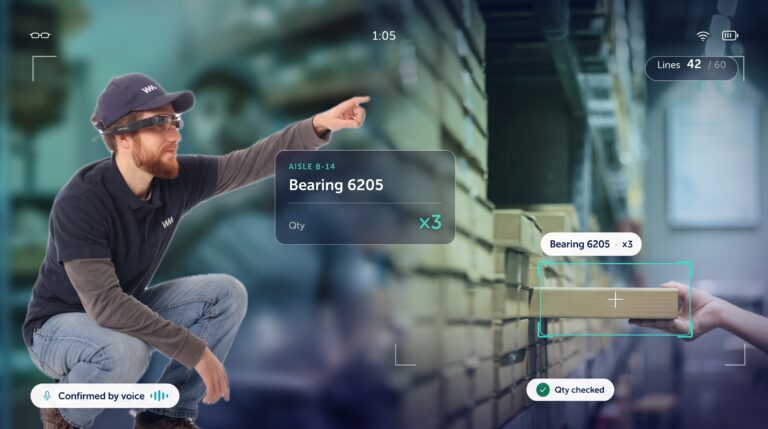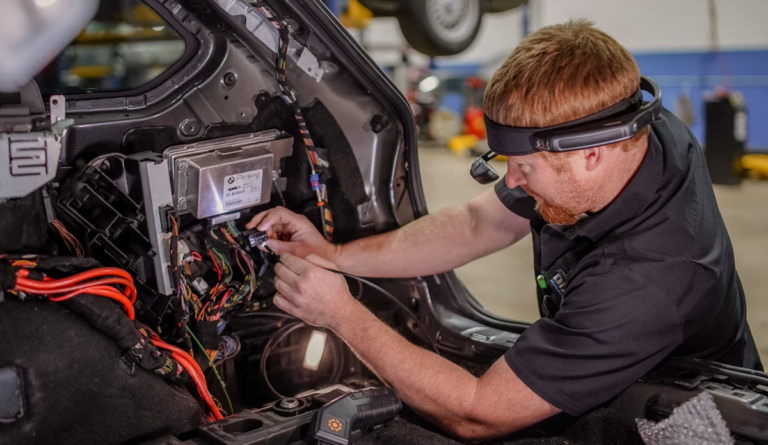








AI smart glasses combine a camera, a display or open-ear audio, and voice or cloud-based intelligence to give field workers or consumers hands-free access to information. In 2026, enterprise-grade devices from RealWear and Vuzix, plus Moziware hardware, run Wideum’s Remote Eye and Process Eye software for live remote assistance and guided workflows, while Rokid targets consumers and prosumers with lightweight AI glasses built around Qwen + ChatGPT + more. This guide compares official specifications and clarifies exactly when each device becomes an “AI smart glasses” solution through software.
Actualizado: 29 September 2026
What are AI smart glasses in 2026?
AI smart glasses are wearable computers that add voice assistants, computer vision or generative AI on top of a camera and a display or speaker. Some models, such as Rokid’s, embed AI engines directly on the device and through a companion app. Others, such as RealWear and Vuzix, are enterprise hardware whose AI functions come from third-party software layered on top, including Wideum’s AI Technical Assistant and Object Detection add-ons for Remote Eye and Process Eye (Wideum).
The enterprise AI smart glasses market in 2026
Enterprise and consumer AI smart glasses are following different paths in 2026. On the enterprise side, Vuzix has committed to M400 product and technical support through 31 December 2028, giving customers a defined hardware horizon for multi-year deployments (Vuzix, M400 Product Support Commitment). On the consumer side, Rokid introduced the ultra-light, display-free Rokid Style at CES 2026, supporting multiple AI engines such as ChatGPT and DeepSeek, according to Rokid’s own news coverage of the launch (Rokid, CES 2026 announcement). This split explains why the same keyword, “AI smart glasses”, covers two very different buying decisions.
RealWear Navigator 500: specifications and AI-ready hardware
The RealWear Navigator 500 is a ruggedised, voice-controlled headset built for hands-free enterprise use. It runs Android 13 with RealWear’s WearHF hands-free interface on a 2,0 GHz octa-core Qualcomm Snapdragon 662 chipset, with 4 GB RAM and 64 GB of internal storage. The device weighs 270 grams, carries a 20° field of view WVGA (854×480) display, and uses a 48 MP camera capable of 1080p video at up to 60fps. It is rated IP66 and MIL-STD-810H, withstands 2-metre drops, and runs on a 2600 mAh hot-swappable battery, with four digital microphones offering active noise cancellation for voice recognition in noise up to 100 dBA (RealWear, official specifications).
Vuzix M400: specifications and AI-enabled use cases
The Vuzix M400 is an OLED-display smart glasses headset aimed at industrial, telemedicine and teleconferencing workflows. It uses an 8-core 2,52 GHz Qualcomm Snapdragon XR1 platform with 6 GB LPDDR4 RAM and 64 GB of flash storage, upgradeable to Android 13. The OLED display offers a 16,8° diagonal field of view, brightness above 2000 nits and contrast above 10000:1. The M400 Xtreme kit includes a hot-swappable 3200 mAh battery rated IP67 and for operation between -20°C and 50°C, and the camera captures up to 13 MP stills and 1080p video at 60fps (Vuzix, M400 product page). In healthcare pilots showcased at the AIMed Global Summit, M400 units paired with partners TeleVU and Ohana One have been used with AI features such as automatic wound-area calculation and identification of key organs on X-ray images, according to Display Daily’s reporting on those demonstrations.
Moziware smart glasses in the Wideum hardware line-up
Moziware smart glasses are part of Wideum’s certified hardware catalogue for Remote Eye and Process Eye, alongside Vuzix and RealWear devices. Wideum’s software is designed to run across these three smart glasses brands as well as on standard phones and tablets, giving technical teams flexibility to choose hardware without changing their remote assistance or task-guidance workflow (Wideum).
Rokid Glasses and Rokid AI Glasses Style: consumer AI glasses
Rokid sells two AI glasses lines aimed at consumers and prosumers rather than industrial deployments. The display model, Rokid Glasses, weighs 49 grams and uses dual Micro LED waveguide displays at 480×400 resolution per eye, a 30° field of view and up to 1500 nits of brightness, alongside a 12 MP camera (3024×4032, f/2.25) capable of video up to 3K at 30fps, and supports real-time translation in up to 89 languages (Rokid, official product page). The display-free Rokid AI Glasses Style weighs 38,5 grams, uses the same 12 MP Sony IMX681 camera with a 109° field of view and up to 10-minute recordings, an IPX4 rating, 32 GB of storage, Wi-Fi 6 and Bluetooth 5.3, a 210 mAh battery with a charging case rated for up to 13 full recharges, and supports prescription lenses from -15,00D to +15,00D (Rokid, official product page). Both lines run on a Qualcomm Snapdragon AR1 chipset with 2 GB RAM, and both give access to Qwen + ChatGPT + more through the Hi Rokid App (Rokid, official product comparison page).
When do these smart glasses run Wideum’s Remote Eye AI add-ons?
RealWear, Vuzix and Moziware smart glasses gain AI capabilities specifically when Wideum’s AI Technical Assistant or Object Detection add-ons are activated on top of Remote Eye or Process Eye. Remote Eye itself is a live video remote assistance tool, and Process Eye is a step-by-step workflow tool; on their own, neither adds generative AI to the hardware. The AI Technical Assistant add-on answers technician questions directly from a company’s own manuals and reports, while the Object Detection add-on applies computer vision to detect, count and verify objects in the camera feed in real time (Wideum). In hazardous areas, the Remote ATEX add-on extends this stack to intrinsically safe environments (Wideum). Rokid’s devices are not part of this compatibility list; their AI functions run through Rokid’s own Hi Rokid App and built-in engines rather than through Wideum’s software.
RealWear vs Vuzix vs Rokid: comparison table
| Model | Weight | Display | Battery | Ruggedisation | Best for |
|---|---|---|---|---|---|
| RealWear Navigator 500 ✅ | 270 g | 20° FOV, WVGA 854×480 | 2600 mAh, hot-swappable | IP66, MIL-STD-810H, 2 m drop | Enterprise, fully voice-driven, hands-free field service |
| Vuzix M400 | — | 16,8° FOV, OLED nHD | 3200 mAh (Xtreme kit), hot-swappable | IP67, -20°C to 45°C | Industrial, telemedicine and teleconferencing |
| Rokid Glasses | 49 g | 30° FOV, 480×400 Micro LED | 210 mAh + charging case | IPX4 | Consumer/prosumer AI assistance and translation |
✅ For Wideum’s typical use case, hazardous or PPE-heavy field service, the RealWear Navigator 500 stands out for combining the highest ruggedisation rating (IP66, MIL-STD-810H, 2-metre drop) with a fully voice-controlled interface that needs no touchpad, and for running natively with Remote Eye, Process Eye and Wideum’s AI add-ons.
Common mistakes when choosing AI smart glasses for field service
The most frequent mistake is buying display-first consumer AI glasses for hazardous industrial sites. Solution: prioritise IP66/IP67-rated, MIL-STD-810H-tested devices such as the RealWear Navigator 500 or the Vuzix M400, and pair them with Wideum’s Remote ATEX add-on for intrinsically safe zones (Wideum).
A second common mistake is assuming a smart glasses camera alone makes a device “AI-ready” for enterprise use. Solution: check whether the hardware is certified to run Wideum’s AI Technical Assistant or Object Detection add-ons on top of Remote Eye or Process Eye, since the AI layer is what turns a camera-equipped headset into a working AI assistance tool (Wideum).
A third mistake is choosing non-swappable batteries for multi-shift operations. Solution: pick devices with hot-swappable packs, such as the Navigator 500’s 2600 mAh battery or the M400’s 3200 mAh Xtreme Weather battery, so a live remote-assistance session is never interrupted by a recharge (RealWear, official specifications; Vuzix, M400 product page).
Key points
- The RealWear Navigator 500 runs Android 13 on a 2,0 GHz Snapdragon 662 chipset, with a 2600 mAh hot-swappable battery and IP66/MIL-STD-810H ruggedisation (RealWear, official specifications).
- The Vuzix M400 pairs an 8-core 2,52 GHz Snapdragon XR1 with a 16,8° FOV OLED display and, in its Xtreme kit, a 3200 mAh IP67 battery; Vuzix has committed to M400 support through 31 December 2028 (Vuzix, M400 Product Support Commitment).
- Rokid’s display-free AI Glasses Style weighs 38,5 g, uses a 12 MP camera and a Snapdragon AR1 chipset with 2 GB RAM/32 GB storage, and supports up to 76 translation languages (Rokid, official product page).
- Wideum’s Remote Eye and Process Eye run on Vuzix, RealWear and Moziware smart glasses, plus phones and tablets, and gain AI capabilities through the AI Technical Assistant and Object Detection add-ons (Wideum).
FAQ
What are the best AI smart glasses for enterprise remote assistance in 2026?
For enterprise remote assistance in 2026, ruggedised voice-driven devices such as the RealWear Navigator 500 and the Vuzix M400 remain the reference hardware, because both combine IP66/IP67 protection with hands-free control and can run Wideum’s Remote Eye and Process Eye software (RealWear, official specifications; Vuzix, M400 product page).
What are the best AI smart glasses for enterprise remote assistance?
Independently of the year, the right choice depends on the environment: fully voice-controlled devices such as the RealWear Navigator 500 suit PPE-heavy sites, while touchpad-and-voice devices such as the Vuzix M400 suit telemedicine and teleconferencing use cases (RealWear, official specifications; Vuzix, M400 product page).
Which smart glasses work with Wideum’s Remote Eye software in 2026?
As of September 2026, Wideum’s Remote Eye and Process Eye software run on smart glasses from Vuzix, RealWear and Moziware, in addition to phones and tablets (Wideum).
Do Rokid’s AI glasses work with Wideum’s Remote Eye software?
No integration between Rokid devices and Wideum’s Remote Eye or Process Eye has been confirmed; Rokid’s Glasses and AI Glasses Style are positioned as consumer and prosumer products with their own Hi Rokid App and built-in AI engines (Rokid, official product page).
How long does the battery last on the RealWear Navigator 500 and the Vuzix M400?
The RealWear Navigator 500 uses a 2600 mAh hot-swappable battery, while the Vuzix M400’s Xtreme kit uses a 3200 mAh hot-swappable battery rated for operation between -20°C and 45°C (RealWear, official specifications; Vuzix, M400 product page).
Sources
- RealWear, Device Specifications
- Vuzix M400 Smart Glasses product page
- Auganix, Vuzix receives regulatory approval and begins shipping M400 Augmented Reality Smart Glasses
- Display Daily, Vuzix M400 Smart Glasses Gaining Support in Healthcare Applications with AI Integration
- Rokid, Rokid Glasses Blend AI, AR, and Style in a Featherlight Frame
- Rokid, Rokid AI Glasses Series collection page
- Rokid, Rokid AI Glasses Style product page
- Rokid, News
- Wideum, Why Your Technicians Avoid Your Remote Support Tool in 2026—And What To Do About It
- Wideum, Buy Smart Glasses for Industrial Remote Support and Workflow